
'Although the real Ayodhya lies at Thori in the west of Birgunj, India has claimed the Indian site as the birthplace of Lord Ram'

The India-Nepal bilateral ties came under strain after Defence Minister Rajnath Singh inaugurated a 80-km-long strategically crucial road connecting the Lipulekh pass with Dharchula in Uttarakhand on May 8.
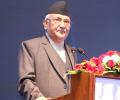
Prime Minister Oli secured 93 votes in the lower house of parliament during a special session convened on the directives of President Bidya Devi Bhandari.
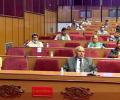
Nepal last month released the revised political and administrative map of the country laying claim over the strategically key areas, more than six months after India published a new map in November 2019.

Prachanda took the oath of office and secrecy from President Bhandari at an official ceremony at Shital Niwas.
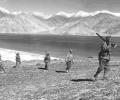
As India and China continue to face off across the Himalayas six decades later, the echoes of that earlier conflict remain unmistakable. The core of China's sensitivity lies not in maps or mountain passes, but in its perception of sovereignty over Tibet, points out Dr Kumar.
Nepal's political crisis deepened on Friday as both embattled Prime Minister K P Sharma Oli and the Opposition parties staked a claim for the formation of a new government by submitting letters comprising signatures of lawmakers to President Bidya Devi Bhandari.
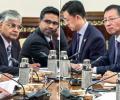
'These efforts by Beijing can be weaponised one day with economic, security and political implications for India.'

Earlier in the day, rich tributes were paid to Yechury at the Communist Party of India (Marxist) headquarters at the AKG Bhavan here, where his mortal remains were brought from his residence in the morning.

The decision was taken just a day before the Army squad was set to travel to Pune, where the drill will commence on Monday, the Kathmandu Post reported.

President Bidya Devi Bhandari administered the oath of office and secrecy to Oli, 69, at a ceremony at Shital Niwas, after he was reappointed to the post on Thursday night as the Opposition parties failed to secure majority seats in Parliament to form a new government.

The JSP has made an electoral alliance with main opposition Communist Party of Nepal-Unified Marxist Leninist headed by K P Sharma Oli.

Maoist supremo Prachanda had a narrow escape when his vehicle was targeted with a roadside bomb in western Nepal on Wednesday.

Veteran Communist leader Madhav Kumar Nepal was on Saturday elected unopposed as the prime minister of Nepal, bringing to an end the nearly three-week long political crisis in the country. The 56-year-old Communist Party of Nepal (Unified Marxist Leninist) leader, who claims to have the support of 351 lawmakers in the 601-member Constituent Assembly, was the only candidate to have filed the nomination for the top post. The Maoists boycotted the voting process.

Now, the bill will undergo a similar process in the National Assembly, wherein the ruling Nepal Communist Party commands two-thirds majority.

Nepal witnessed political turbulence in 2022 that dramatically turned rivals into allies and throned former guerrilla leader Pushpa Kamal Dahal 'Prachanda' as the prime minister for a third time, as Kathmandu made efforts to balance ties with immediate neighbours India and China with high-profile talks and visits.
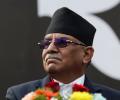
Former Nepalese foreign minister Ramesh Nath Pandey observed that the current situation is not encouraging for India-Nepal ties, saying the "present leaders" created irritants in the relationship in the past.

The main Opposition party Communist Party of Nepal-(Unified Marxist-Leninist) (CPN-UML) disrupted the National Assembly meeting on Wednesday, demanding the prime minister's resignation. The meeting has been postponed to 1 pm Thursday.

China showcased its latest military hardware, including hypersonic and ballistic missiles, during a parade commemorating the 80th anniversary of its victory against Japanese aggression in World War II. President Xi Jinping called for world peace and national rejuvenation.
In a dramatic turn of events, Communist Party of Nepal-Maoist Centre chairman Pushpa Kamal Dahal 'Prachanda' was appointed as the new prime minister of Nepal by President Bidya Devi Bhandari on Sunday.

In 2017, a retired R&AW officer conveyed that Uttar Pradesh Chief Minister Yogi Adityanath was keen to get monarchy restored in Nepal and suggested that I support these efforts.
Madhav Kumar Nepal was sworn-in on Monday as the Prime Minister of Nepal along with two cabinet ministers, capping the three-week long political crisis in the country that eased Maoists out of power after a confrontation with the army.
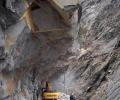
The government had registered the amendment proposal in Parliament on May 22 after releasing the new political map of Nepal depicting Kalapani, Lipulekh and Limipiyadhura as its territories on May 18.
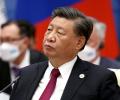
Xi Jinping's recent actions in South Asia have amply demonstrated the disastrous impact of China's embrace, observes Jayadeva Ranade, the retired senior RA&W officer and China expert.

Bhattarai said his party 'Naya Shakti Nepal' would bear the "historic responsibility" of making Nepal prosperous and developed.

India last month reacted angrily to Nepal showing the three areas as Nepalese territory in the new map and cautioned the country that saying such "artificial enlargement" of territorial claims will not be acceptable to it. India has been maintaining that these three areas belong to it.
Two Nepalese expeditions to the Mt. Everest will be carrying the red flag of the Communist Party of Nepal (Maoist) to plant on the peak if they are able to make it to the top.
The move comes as the intra-party feud reached climax in the ruling NCP which has been witnessing months long tussle between two factions, one led by 68-year-old Oli and Party's chairman and another led by 66-year-old 'Prachanda', also the executive chair of the party and former premier.

Maoist chief Prachanda was on Wednesday elected by lawmakers as Nepal's Prime Minister for a second time.
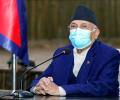
Former Nepalese prime minister KP Sharma Oli claimed that he was removed from power last year after his government published a new map of Nepal that included Kalapani, Limpiyadhura and Lipulekh as its territories.

Three Madhesi leaders have supported Prachanda's candidacy.
Terming the Communist Party of Nepal (United Maoists Leninst) as a "black sheep" among the communists, Nepal's former Premier and Maoist chief Prachanda has said he will launch the "people's movement-III" by forging an alliance with "nationalist forces" to establish civilian supremacy in the country.
Nepal plunged into a political crisis after President Bidya Devi Bhandari dissolved the House of Representatives and announced dates for mid-term elections at the recommendation of Prime Minister Oli on Sunday, sparking protests from a section of the ruling party and various opposition parties.

With the support from eight political parties, 78-year-old Poudel's victory was certain. His rival Subas Chandra Nebmang had support of former prime minister KP Sharma-led CPN-UML.
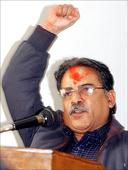
An image of Maoist leader Prachanda speaking at a public function.
Nepal's most powerful politician and Maoist supremo Prachanda was on Friday left shaken after a young activist, believed to be a supporter of his own party, slapped him in full public view. The incident took place during a tea reception hosted by Prachanda's Unified Communist Party of Nepal - Maoist to mark the festivals of Deepawali, Chhath and Nepalese New Year in Kathmandu.

As Nepal's Prime Minister Baburam Bhattarai prepares to undertake his maiden visit to India, his party -- the Unified Communist Party of Nepal-Maoist -- asks him not to sign a treaty with New Delhi and avoid discussing controversial issues. So is this visit simply a goodwill call or will Bhattarai defy his party. Shubha Singh analyses
The students, all below the age of 18, were abducted from different schools in eastern Nepal.
The delegation met Nepalese Congress President Girija Prasad Koirala.
Two senior Maoist leaders on Wednesday met Indian Ambassador Shiv Shanker Mukherjee in Kathmandu and discussed the current political situation and the peace process in Nepal.
